

This Content Is Only For Subscribers
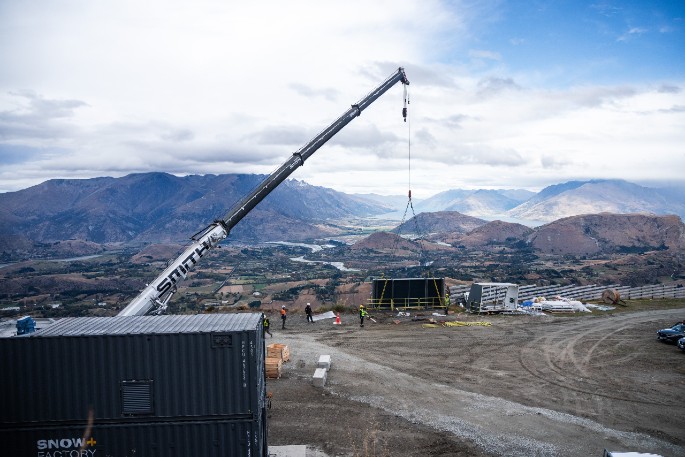
Construction is progressing on Coronet Peak’s new SnowFactory, with NZSki aiming to guarantee an earlier start to the winter season and strengthen Queenstown’s appeal as a snow destination.
The $2 million-plus system is being installed ahead of commissioning next week, with snow production expected to begin from May 1.
Earlier certainty for winter visitors
NZSki says the SnowFactory will allow Coronet Peak to produce snow regardless of air temperature, helping build an early-season base ahead of winter.
The move means Coronet Peak expects to remain the first New Zealand ski field to open each year, with learner slopes scheduled to open on May 29.
NZSki chief executive Paul Anderson says the investment is designed to give travellers confidence to book early-season holidays.
“The SnowFactory gives us the ability to produce snow regardless of air temperature, which means we can confidently build a snow base well ahead of winter and give guests the confidence to book their ski holidays,” Paul says.
Tourism boost for Queenstown
The development is significant for Queenstown’s winter visitor economy, where reliable early snow conditions help drive demand for accommodation, hospitality and activities.
Coronet Peak ski area manager Nigel Kerr says the new system will also improve access for beginner skiers and families.
“This investment allows us to open beginner terrain earlier and with more certainty,” Nigel says.
“Snow play is hugely important for families and visitors who simply want to experience snow, and this gives us the confidence to deliver that from the very start of the season.”
High-capacity snow production
Once operational, the electrically powered SnowFactory is expected to produce up to 200 cubic metres of snow a day — enough to cover a rugby field with 10cm of snow in just over three days.
The system freezes water into snow without chemical additives.
Wider mountain investment
The SnowFactory forms part of a broader $4 million capital works programme at Coronet Peak for 2026, including upgrades to learner terrain, grooming equipment, rental gear and additional snowmaking infrastructure.
The investment comes as ski operators increasingly focus on certainty, early openings and climate resilience to attract domestic and international visitors.