

This Content Is Only For Subscribers
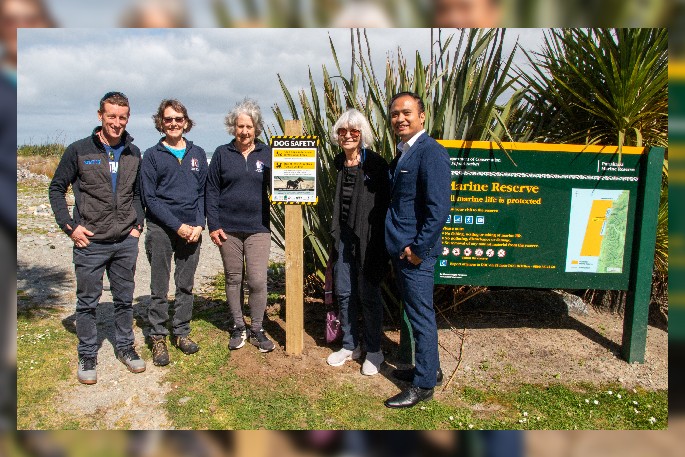
Scenic Hotel Group is backing new dog safety signs at West Coast beaches through Development West Coast’s Nature Economy Partnership, supporting efforts to protect the wildlife that helps draw visitors to the region.
The sponsorship supports the West Coast Penguin Trust as it marks its 20th anniversary, with signs being installed at beach access points across Buller, Grey and Westland.
Scenic Hotel Punakaiki manager Robert Afan says the health of the region’s natural environment was closely connected to the tourism sector’s future.
“As a business operating in one of the West Coast’s most remarkable natural environments, we recognise how closely our future is connected to the health of the landscapes and wildlife that make this region special.”
“The Nature Economy Partnership provides a practical way for businesses like Scenic Hotel Group to support local conservation and community initiatives, creating positive outcomes for both nature, our visitors and the people who call the West Coast home.”
“Through our support for the West Coast Penguin Trust, we’re proud to contribute to protecting the natural environment that underpins our region’s identity and tourism economy.”
Launched in July, the Nature Economy Partnership connects businesses with conservation and community projects across the West Coast, providing a pathway for private investment in biodiversity, habitat restoration, recreation and community wellbeing.
Scenic Hotel Group supports both the West Coast Penguin Trust and the Ōkarito Plant Project through the partnership.
Nature Economy Partnership lead Zak Shaw said collaboration was central to the initiative.
“The aim is to bring businesses, conservation groups, communities, and other organisations together, recognising that each has a different but complementary role to play. By working together, we can combine our strengths, resources, and expertise to achieve stronger, more lasting outcomes for the West Coast”.
The new signs replace those installed in 2020 and encourage dog owners to keep their dogs under close control, either close by or on a lead, and at least 20 metres from wildlife.
Their wording and design were agreed with the Department of Conservation, the dog control teams at Buller, Grey and Westland district councils, and Scenic Hotel Group. DOC is installing the signs.
West Coast Penguin Trust manager Inger Perkins says the approach put dog safety first while also protecting vulnerable coastal wildlife.
“Dogs can be hurt or made ill by wildlife, and no owner wants to see that. A dog on a lead or close by is a safe dog, and when dogs are safe, penguins and other wildlife are safe too. The same goes at home: a dog that is secure and not roaming is a dog that stays out of trouble.”
Dogs continued to kill both kororā, little penguins, and tawaki, Fiordland crested penguins, despite a significant reduction in losses over the trust’s two decades of work.
“These signs are a simple, practical way to help dog owners to keep their dogs safe at our wonderful West Coast beaches. We are very grateful to Development West Coast’s Nature Economy Partnership and Scenic Hotel Group for backing this project, and to DOC and our three district councils for their support and expertise. In particular, thank you to DOC for installing the signs.”
Founded October 16 2006, the trust carries out research, monitoring, community education, advocacy and predator control to protect penguins and other threatened seabirds. Its work also includes tāiko, the Westland petrel, which breeds only near Punakaiki.
The signs include DOC’s hotline for reporting injured wildlife and district council contacts for reporting uncontrolled dogs.