

This Content Is Only For Subscribers
Air New Zealand will open bookings for its much-anticipated Skynest sleep pods from May 18, marking a new step in long-haul travel innovation aimed at improving the journey to and from New Zealand.
The world-first product will be available on the airline’s new Boeing 787-9 Dreamliner aircraft, which are due to enter service from November, targeting ultra long-haul routes where travel time remains a key barrier for visitors.
Designed for long-haul travel to New Zealand
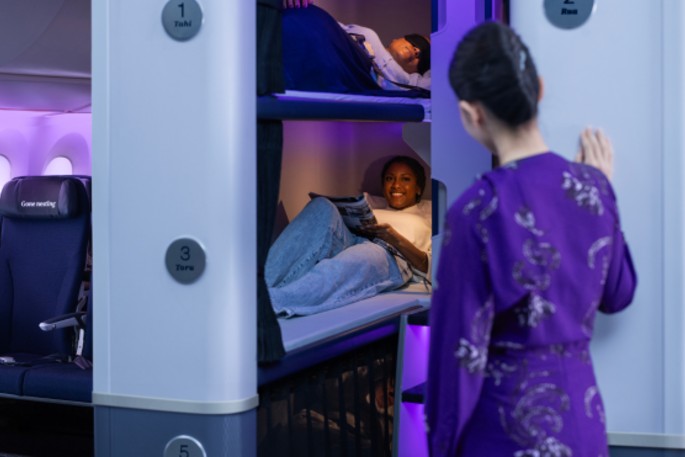
Skynest features six lie-flat pods in a bunk-style layout between Economy and Premium Economy, giving passengers the option to book a four-hour rest period during their flight.
Air New Zealand chief executive Nikhil Ravishankar says the product is designed with New Zealand’s geographic isolation in mind.
“For a country as remote as New Zealand, the journey matters. International tourism is an $18.1 billion industry, but growth depends on travellers’ willingness to spend long hours in the air to get here,” he says.
“By giving more people the chance to properly rest on ultra long-haul flights, it helps make travel to and from New Zealand more manageable.”
Supporting inbound tourism and connectivity
The introduction of Skynest reflects a broader focus on improving the end-to-end travel experience, particularly as airlines compete to attract long-haul visitors.
Customers travelling in Economy or Premium Economy will be able to add a Skynest session, with two four-hour slots available per flight. The sessions are structured to align with natural sleep cycles, allowing time to settle, rest and wake gradually.
Each pod includes a full-length mattress, bedding, ambient lighting, ventilation and charging points, designed to provide a private, quiet space for rest.
Innovation as a competitive advantage
Developed over several years and tested with more than 200 customers, Skynest builds on previous innovations such as the Skycouch, reinforcing Air New Zealand’s positioning in long-haul product development.
Nikhil says the concept responds to changing traveller expectations.
“It is about recognising that customers value flexibility, comfort and control, and giving more people the opportunity to travel in a way that works better for them.”
As airlines continue to compete for long-haul demand, particularly into geographically distant markets like New Zealand, product innovations such as Skynest are likely to play an increasing role in shaping travel decisions.