

This Content Is Only For Subscribers
A large flock of young kea visiting Aoraki Mount Cook National Park has become part of a new trial aimed at tracking the movements of the alpine parrot.
Department of Conservation staff recently caught and tagged 31 kea from a flock of about 36 birds near the Red Tarns above Aoraki Mount Cook Village.
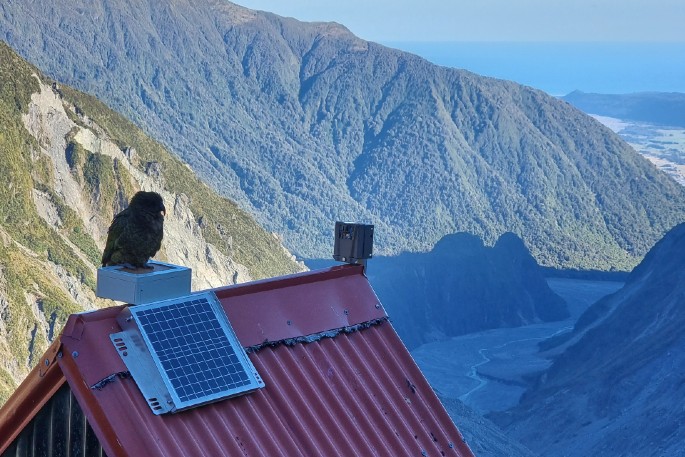
The birds were fitted with leg bands containing tiny RFID (radio frequency identification) microchips. Solar-powered readers installed on hut roofs and other sites scan the bands as kea land, allowing researchers to record their movements.
DOC senior science advisor Kerry Weston says the group is the largest flock recorded at Aoraki since kea monitoring began in 2019.
“They were mostly young kea, many newly fledged from their nests, including one bird that had travelled 40km from Whymper Hut on the West Coast across the main divide,” Kerry says.
“This is the largest flock of kea I’ve seen at Aoraki or anywhere. Combined with increased sightings around the park, it’s a positive sign the local kea population is increasing.”
Young kea often gather in roaming flocks during late summer and autumn, but their origins and travel patterns are not well understood.
More than 420 kea have been fitted with RFID tags over the past two summers as part of the monitoring programme.
There are currently 13 readers installed at huts and other locations across Aoraki Mount Cook and Westland Tai Poutini national parks and nearby conservation areas. Additional readers are planned, including at New Zealand Alpine Club huts.
The tracking system provides a low-cost way to monitor kea movements, with leg bands costing less than $1 each and data collected automatically as birds visit monitored sites.
The trial is supported by the World Parrot Trust and contributes to a new recovery strategy developed by DOC, Te Rūnanga o Ngāi Tahu and the Kea Conservation Trust.
Improved understanding of kea movements will help inform predator control and conservation management across the Southern Alps.
DOC says predators such as stoats and feral cats remain a major threat to kea, which nest and forage on the ground.
Visitors are encouraged to give kea space, avoid feeding them and secure belongings when visiting alpine areas.