

This Content Is Only For Subscribers
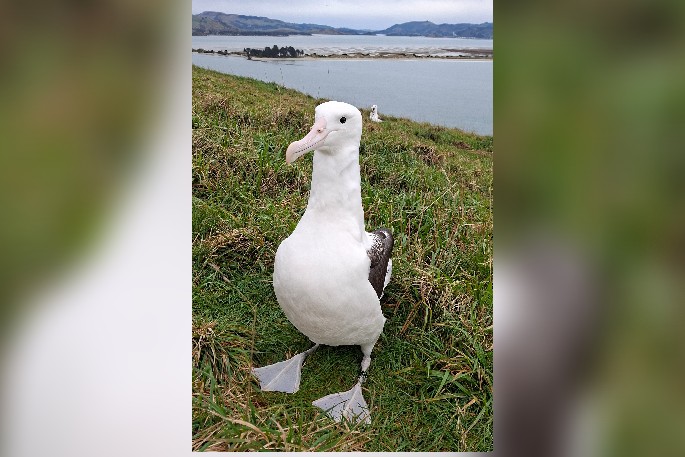
The first toroa/royal albatross chicks have left their nests and launched into 5-year adventures across the world’s oceans.
The Department of Conservation has confirmed the first toroa chicks fledged last week and over the weekend. Āwheo, the chick who features on the 24-hour livestream set up at the breeding colony, has also flown away, possibly taking advantage of the strong winds buffeting Pukekura.
Last season a record 38 chicks fledged, and DOC biodiversity ranger Sharyn Broni hopes to see that record equalled this year.
“We’ve had so many milestones recently, with last year’s record fledgling season and then the 1000th chick hatching,” says Sharyn.
“Now, we’re at this exciting time of year when the chicks start to leave as all the hard work the rangers have done pays off. We’ve seen the chicks starting to practice in the strong winds, flapping and strengthening their wings getting ready for their long journeys.”
Once leaving Pukekura, juveniles quickly adapt to life on the ocean where they will spend 85 per cent of their lives. They learn to feed off the east coast of Aotearoa/New Zealand before crossing 9000 km of Pacific Ocean to the Humbolt Current off the coast of Chile. Juveniles do not touch ground for an average of five years, when they return to their breeding ground having circumnavigated the globe.
DOC co-manages the albatross colony near Ōtepoti/Dunedin as part of Te Poari a Pukekura (TPP) alongside Te Rūnanga o Ōtākou, Korako Karetai Trust and Dunedin City Council, with the support of the Otago Peninsula Trust.
TPP chairman Bill Karaitiana says it’s a memorable time seeing the toroa start to fly away.
“These special manu give us many more pairs of eyes which will be flying over and surveying the ocean ecosystem, giving us valuable insights. The challenge for Te Poari a Pukekura is to build the body of knowledge about the ocean, the land, and the flora and fauna. The toroa can help us better understand the mauri (life force) of its ecosystem,” he says.
Sharyn says now that the chicks have started to fledge, their parents can have a rest.
“These chicks are huge and, understandably, their parents are exhausted from 7 months of feeding them!”
The adults will also head across the Pacific Ocean, where they will spend the next 12 months building up reserves for a new breeding season.
“Then we’ll see them back again, which is so exciting, every season they return,” she says.