

This Content Is Only For Subscribers
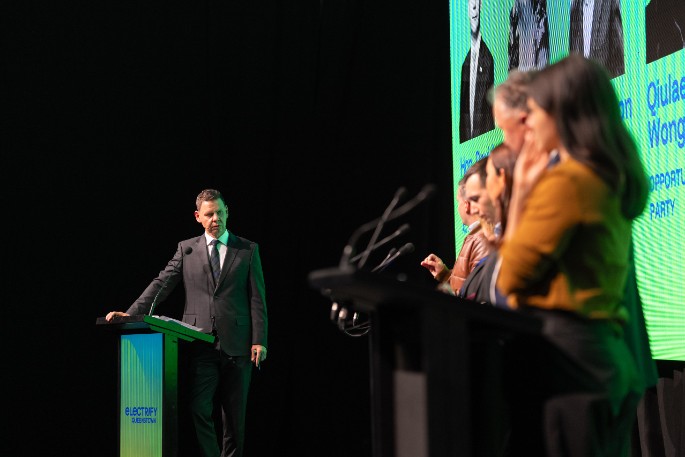
Leading politicians debated New Zealand’s energy future on the second day of Electrify Queenstown 2026 yesterday.
The sold-out session, moderated by Paddy Gower, opened with speeches from Deputy Prime Minister and ACT Party leader David Seymour, Labour leader Chris Hipkins, Energy Minister Simeon Brown, New Zealand First co-leader and Associate Energy Minister Shane Jones, Green Party co-leader Chlöe Swarbrick, and The Opportunities Party leader Qiulae Wong.
Labour energy and resources spokesperson Megan Woods later stepped in for Mr Hipkins during the leaders’ debate.
The discussion covered some of the country’s biggest energy and economic questions, including electricity market structure, the role of gentailers, the proposed LNG import facility, subsidies, ratepayer support, electrical apprenticeships and the future resilience of New Zealand’s economy.
Destination Queenstown and Lake Wānaka Tourism chief executive Mat Woods says the breadth of the discussion stood out.
“This was not just a debate about electricity; it was about affordability, resilience, productivity, equity, fairness, and the kind of energy system New Zealand needs for the future.
“Queenstown was the right place for this conversation. As a fast-growing district with real infrastructure pressures and big ambitions around resilience, we understand how important it is to think differently about energy, investment and long-term planning.”
The debate closed the second day of Electrify Queenstown’s Business Innovation, Investment and Policy programme.
International inventor, scientist and electrification advocate Saul Griffith delivered a keynote speech on the global direction of electrification, sharing insights into how countries, communities and businesses can move faster towards cleaner, more affordable energy systems.
Earlier in the day, Rewiring Aotearoa chief executive Mike Casey outlined the competitive advantages of electrification, while Aurora Energy chief executive Richard Fletcher shared what is next for the region’s electricity network.
Southern Infrastructure chief executive Ross Copland also outlined progress on Queenstown’s proposed cable car project and explored how major infrastructure could support a more connected, lower-emissions future for the district.
Sessions also explored green finance and funding pathways, with representatives from Westpac, Energy Efficiency and Conservation Authority and Pic’s Peanut Butter, while Ara Ake led a discussion on reimagining energy for a low-emissions Aotearoa alongside the New Zealand Climate Foundation, Queenstown Electrification Accelerator and the Climate Change Commission.
Alongside the main auditorium sessions, attendees connected with practical technologies, advisers and suppliers through the How-To Hub, designed to help households and businesses take practical steps towards electrification.
Backed by principal sponsor Aurora Energy, Electrify Queenstown 2026 concludes on Tuesday with a focus on practical implementation, business transition and community action.