


This Content Is Only For Subscribers
Until recently, diesel ran almost everything at Timber Trail Lodge, from the lights and the kitchen to the hot water and heating.
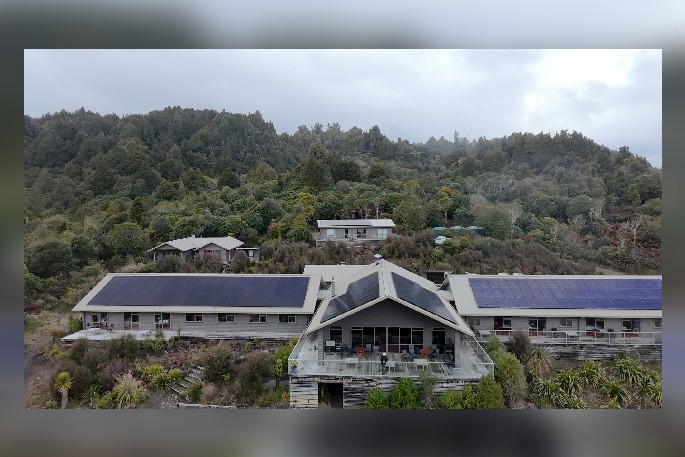
Then the lodge went solar, and a wet day put the new system to the test.
November 9, it rained at Piropiro for most of the day. The new panels still produced around 100 kWh, enough to fill the batteries to 100 per cent.
The system is Phase 1 of the lodge’s $130,000 move off diesel, funded with a green loan. Operations manager Russell Malone expects it to halve the lodge’s diesel use, saving 18.5 tonnes of CO2 a year. He says that’s only the start.
Built for bad weather
The lodge added 120 new panels to its existing solar, taking it to about 76 kWp.
“On a clear day we are seeing peak generation of up to around 75 kW. In simple terms, at that rate there is enough generation to recharge our 130 kWh battery bank in around two hours, although in practice the Lodge is using power at the same time and battery state of charge varies,” Russell says.
Sunny days aren’t what he’s watching, though.
“The more important test for us is what happens on poor-weather days,” he says.
The kitchen is the biggest drain on power.
“At present the Lodge is typically consuming around 100–120 kWh per day. The biggest loads tend to occur around breakfast and dinner preparation, particularly from commercial kitchen equipment such as the dishwasher,” Russell says.
On a cycle trail, you might expect the e-bikes to be a big load too. They’re not.
“We don’t see a discernible demand from the bikes, they don’t require much power,” he says.
A $47,500 fuel bill
“The Lodge was using approximately 12,500–13,800 litres of diesel a year, split broadly between electricity generation and hot water/space heating,” Russell says. “At 12,500 litres a year, that represented an annual diesel cost of approximately $47,500.”
He expects the system to pay for itself in about five years.
“We expect to see modest improvement in the P&L in the short to medium term – improving as the loan is repaid,” he says.
The fuel bill wasn’t the only cost. The lodge’s ageing boilers and generators were too.
“There are some off-the-page assumptions about the maintenance costs and life expectations of the mechanical systems like boilers and generators. These systems are costly to maintain as they age,” Russell says.
Power first, heat second
“Importantly, 50% is not the end target,” he says.
Phases 2 and 3 will switch the lodge’s hot water and space heating from diesel to heat pumps. But the solar had to come first.
“There was no point in replacing diesel burners with heat pump if the electricity was generated from diesel,” Russell says.
The first of five or six heat pump hot water systems is already in. The rest will be funded from working capital over the next year or so.
“We will install the hot water systems before the space heating so we can see a full year through,” he says.
Selling the story
Trade partners are asking about it.
“Some of the trade operators ask for sustainability information as part of the onboarding,” Russell says. “Our kōrero includes information about our sustainability programme and this is always received well from the guests.”
Design for the rain
Russell’s advice to other operators is to plan the whole system, not just the panels.
“The biggest lesson would be to design the entire energy system rather than simply think about adding solar panels,” he says.
Being remote adds its own complications.
“Everything has to be planned carefully because getting people, equipment and replacement parts into Piropiro is not as simple as working on an urban site,” Russell says. “Also, get an experienced tradesperson for electricity and plumbing. Get them together as part of the planning.”
Above all, he says, plan for the weather.
“I would also say, design for the poor days, not the perfect sunny days. Sunny-day production is relatively easy. What really matters in an off-grid system is whether it still performs when it is cloudy, wet and cold.”