

This Content Is Only For Subscribers
New Zealand’s southernmost kauri forest has been confirmed free of Phytophthora agathidicida (PA), the pathogen responsible for kauri dieback disease.
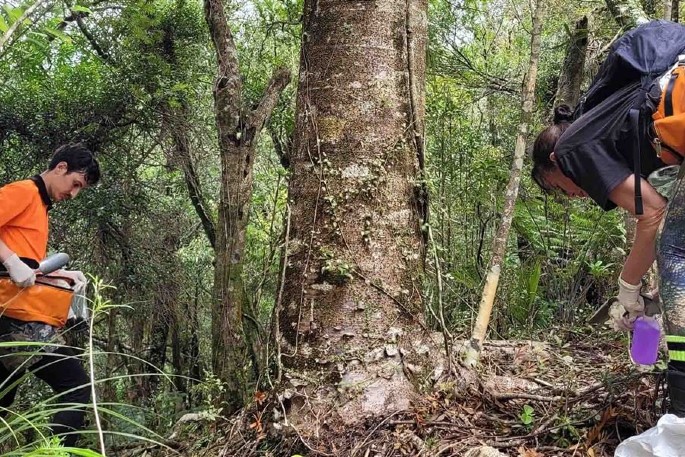
The finding follows an extensive survey led by the Department of Conservation and the Kaimai Mamaku Restoration Project, involving more than 1,686 hours of field work across more than 20,000 hectares of Kaimai Mamaku Conservation Park.
Extensive survey effort
Department of Conservation regional lead kauri protection Tracy Mezger says the result provides confidence that the disease is not present in the forest.
“Our worst fear was it was already here and we’d be playing catch-up to protect these beautiful trees from the devastating impacts of kauri dieback disease.
“But the level of sampling done means we’re very confident it’s not there – and we’re committed to keeping it that way.”
The survey assessed the presence of PA in soil samples while also establishing baseline information on kauri health to guide future protection and management efforts.
Encouraging signs
Tracy says almost 80 per cent of survey sites contained kauri seedlings or saplings.
“Almost 80 per cent of sites had kauri seedlings or saplings present, which is an encouraging sign of ongoing regeneration and ecosystem resilience.”
The forest is estimated to contain more than 23,000 mature canopy-level kauri, along with potentially millions of seedlings.
Kauri are regarded as ecosystem engineers, helping reduce erosion and downstream flooding while creating conditions that support other indigenous plant species.
Partnership approach
The project was co-designed with iwi and hapū, including Ngāti Hako, Ngāti Tumutumu, Ngāti Hinerangi, Ngāti Te Wai and Ngamanawa Incorporation.
Tracy says iwi participation was central to the programme.
“Iwi kaimahi were empowered to take an active role in all aspects of the work, from tīkanga and planning, all the way to biosecurity protocols and taking samples.
“It was true collaboration and learning for all of us.”
Focus turns to protection
Despite the positive result, survey teams recorded evidence of human and animal disturbance, along with other plant pathogens that could affect forest health in the future.
Wairere Mahi general manager Tim Aoake says the work is far from over.
“Doing this work felt like we were re-tracing the steps of our tūpuna.
“And now we know we have kauri free from PA, the question we ask is ‘how do we protect them?’.”
Kaimai Mamaku Conservation Park is only the second forest in New Zealand to receive a clean bill of health for kauri dieback disease, following the Hūnua Ranges in 2025.
Ngāti Te Wai representative Riki Nelson says visitors must continue to follow biosecurity measures.
“While we’re relieved comprehensive testing has found no evidence of the disease, this is not a signal to relax.
“The risk remains, and we all have a responsibility to continue biosecurity measures that help protect these iconic forests for future generations.”
Visitors are encouraged to remove soil from footwear, use hygiene stations and remain on designated tracks.
Safeguarding the future
Manaaki Kaimai Mamaku Trust chief executive Louise Saunders says the result provides an opportunity to further improve forest health.
“Kauri are one of the tallest and most significant trees in the motu.
“Knowing our kauri forests are disease-free, we can significantly improve forest health with the DOC feral goat eradication programme and landscape-scale pest control projects, safeguarding these forest giants for future generations.”