

This Content Is Only For Subscribers
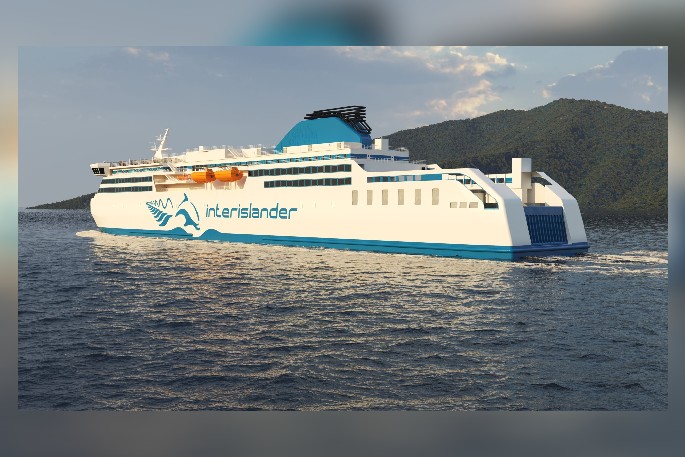
Ferry Holdings Ltd has been working closely with KiwiRail and Guangzhou Shipyard International to progress the detailed design of the two new Cook Strait ferries and is now able to provide more detail about their features.
The new ferries go beyond standard requirements for new ships to ensure safety and minimise any impacts in Cook Strait’s unique environment, Ferry Holdings chair Chris Mackenzie says.
“The new Cook Strait ferries are being designed specifically for their route between Wellington and Picton, going above and beyond a typical new build to ensure resilience, reliability and minimise any impacts on the environment,” Chris says.
“The vessels will have advanced bridge technology, including LIDAR scanning, to support the crew’s situational awareness, remote anchor deployment from the bridge and robust towing arrangements provide further safeguards for emergency situations.
“In addition to these safety measures, we have added extra redundancy to the propulsion, steering and power systems to ensure any system failure can be recovered in a matter of minutes. This is an important backstop, given much of each ships journey is in the narrow confines of the Marlborough Sounds and Wellington Harbour.
“The ships’ hull and low-vibration propulsion is also optimised for their route through Marlborough Sounds and Wellington Harbour, to minimise any wake and noise impacts on the marine environment and support passenger comfort.”
Chris says, given the ferries will serve New Zealand for the next 30 years, significant steps have been taken to future proof them.
“The vessels will combine use of onboard solar panels, a battery energy storage system, will be shore-power capable, and the use of alternative potential future fuels – such as methanol – is being incorporated into their design.
“Overall, the two new ships will offer greater transport efficiency and contribute to New Zealand’s emission reduction goals. The combination of their larger size than the current Interislander fleet, modern fuel-efficient engines, battery power and optimised hull design, will see them burn less fuel and emit 30 per cent less carbon emissions for every passenger and unit of cargo carried.”
Interislander general manager operations, Taru Sawhney says the new ships will provide an enhanced experience for Interislander passengers and freight customers.
“We’ve been working closely with Ferry Holdings as part of the design process, with our people having input into the interior layout, crew accommodation, customer areas, and providing technical expertise into key operating features.
“We are excited about the arrival of the new vessels and are in full planning mode as we prepare for the transition from old to new.”
Port infrastructure work in Wellington and Picton is progressing well and remains on schedule to be completed before the new ferries arrive in 2029.
In Wellington, deconstruction and removal of old, unneeded infrastructure started in 2025 and is expected to be completed by March 2027. Construction work on the new wharf extension started in July 2026.
In Picton, work to remove the old linkspan and overbridge used for Aratere is complete; a transition berth for Interislander is being built, scheduled for completion in March 2027. Enabling works on the new wharf are underway, with construction expected to start in February 2027.