

This Content Is Only For Subscribers
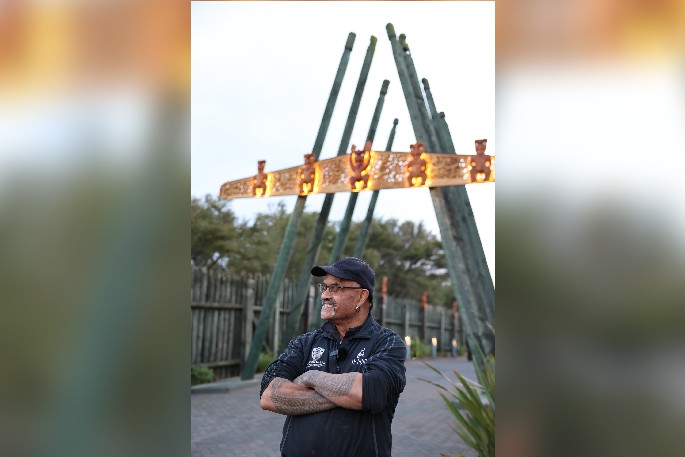
Te Puia | New Zealand Māori Arts and Crafts Institute (NZMACI) has marked a significant centenary this morning with the dawn unveiling of a new waharoa representing its three wānanga, the wider organisation and the enduring legacy of the legislation that laid its foundations.
The unveiling marks 100 years since the Māori Arts and Crafts Act 1926 became law. The Act was the culmination of a wider movement to protect, revitalise and carry forward Māori arts, culture and knowledge at a time when many traditional practices were in decline.
Central to that movement was Tā (Sir) Apirana Ngata, the first Māori law graduate in New Zealand and an influential parliamentarian, alongside other Māori leaders and Te Arawa rangatira. They were instrumental in the establishment of a national framework for teaching and perpetuating Māori arts and crafts.
The Māori Arts and Crafts Act 1926 provided for a wānanga (school), with a tumu (head of school) and pouako (tutors) to teach Māori arts, reflecting a fundamental belief that traditions would endure only if the knowledge behind them continued to be taught, practised and passed on.
A century later, that purpose remains at the heart of NZMACI.
In 2020, the New Zealand Māori Arts and Crafts Institute Vesting Act marked another significant milestone in the Institute’s history, transitioning ownership from the Crown to mana whenua through the Te Puia NZMACI Limited Partnership.
Te Puia | NZMACI chief executive Tim Cossar says the new waharoa gives physical expression to that legacy, honouring the people, knowledge and relationships that have enabled Māori arts to continue to live, evolve and be carried from one generation to the next.
He says the 100-year story of NZMACI is ultimately one of keeping mātauranga Māori alive, strong and carried forward.
Cossar points to the Institute’s brand mark, designed by founding tohunga whakairo Hōne Te Kāuru Taiapa: Te Pōito – “te pōito whakarewa i te kupenga”, the buoy that keeps the net afloat.
“Like a kupenga (net), our strength comes from every strand working together. Every kaimahi (staff member), tauira (student) and leader is a pōito, helping keep the net afloat. Together, we unite culture and commerce to uplift Māori culture, strengthen our people, create enduring value, honour over 100 years of legacy, and carry forward the purpose first established in 1926.
“A century ago, Māori leaders understood that the survival of Māori arts depended on more than preserving what remained – it depended on teaching, practising and passing that knowledge on.”
New Zealand Māori Arts and Crafts Institute and Organisational Culture general manager Eraia Kiel says what began with the Māori Arts and Crafts Act in 1926 has evolved through generations of leaders, tohunga, tumu (heads of schools), pouako (tutors) and tauira (students) into the living institution we see today.
“Their vision was about ensuring Māori knowledge remained alive in the hands of the next generation.
“The unveiling of this waharoa is a powerful expression of that legacy.
“As we reflect on the history of cultural perpetuation, I also want to acknowledge that long before the 1926 Act, our people, especially the kaiārahi (guides) were instrumental in sharing the knowledge and traditions of Māori culture with tourism manuhiri (visitors) from the late 1800s. This history includes guiding of the Pink and White terraces, till the eruption of Mt Tarawera, then re-establishing here at Whakarewarewa Geothermal Valley.
“He rau ringa, e oti ai, the many hands that have contributed,” says Eraia
Among the first generation of tauira was Tohunga Whakairo Rākau Clive Fugill, who joined NZMACI in 1967 and has spent more than six decades learning and teaching whakairo.
He says that for him, it’s about taking what he was taught by his master Hōne Te Kāuru Taiapa and keeping his legacy alive.
“To me, it’s the perpetuation of traditional Māori arts and crafts and the tikanga around it, and continuing the legacy on into the future – that’s what’s kept me here all these years
“You come here to learn this art to pass it on to the next generation. I think we’ve done remarkably well at that.”
Waharoa representing the wānanga and guiding legacy
The waharoa features five pou to represent the foundational pillars of Te Puia | NZMACI. Woven through the forms are the three wānanga – Te Wānanga Whakairo Rākau (National School of Wood Carving), Te Takapū o Rotowhio (Stone and Bone Carving School) and Te Rito o Rotowhio (National Weaving School).
The centre pou of the new waharoa is Pōhutu Geyser, alongside a pou representing the guiding legacy.
Surrounding manaia represent the many people who have shaped Te Puia | NZMACI across generations: tumu (heads of schools), pouako (tutors), tauira (students), kaimahi (staff), whānau and manuhiri (visitors).
Drawing on diverse tribal styles from across Aotearoa, the carving is intended as a place of connection and belonging, where generations can see themselves within the story of Te Puia | NZMACI.
The symbolism connects with the expression on the 1967 Institute opening plaque at Te Puia:
“Te whare i whakaarahia i roto i te pā tūwatawata o ngā tūmanako. The house that is fortified in the aspirations of our ancestors.”
Kiel says “it is pivotal that we stop and pause on this day to acknowledge the 100 years since the 1926 Māori Arts and Crafts Act. The symbolism of the waharoa is an important reminder as we move into the next 100 years”.
A centenary programme will be rolled out over the next 12 months.