

This Content Is Only For Subscribers
Community conservation efforts across the West Coast are estimated to be worth about NZ$2.3 million over five years, with residents and businesses being encouraged to further support environmental projects during Conservation Week.
The Department of Conservation says more than 70 community groups are active across Te Tai Poutini, working on species protection, pest control, native planting and maintenance of recreation assets such as huts and tracks.
Tourism assets among beneficiaries
Department of Conservation western South Island operations director Owen Kilgour says local communities place high value on the natural environment.
“We’re seeing the impact various groups and initiatives have on our plants, species, and special places and we want to say thank you and encourage people to get involved however they can.
“Across the West Coast, we are aware of more than 70 community groups doing great work with animals like little penguins and great spotted kiwi, looking after recreation assets such as huts and tracks, maintaining trapping networks and removing pest plant species.”
The work has implications for tourism, with tracks, huts and wildlife among key drawcards for domestic and international visitors.
Business partnership grows
DOC says it is also working with Development West Coast through the Nature Economy Partnership.
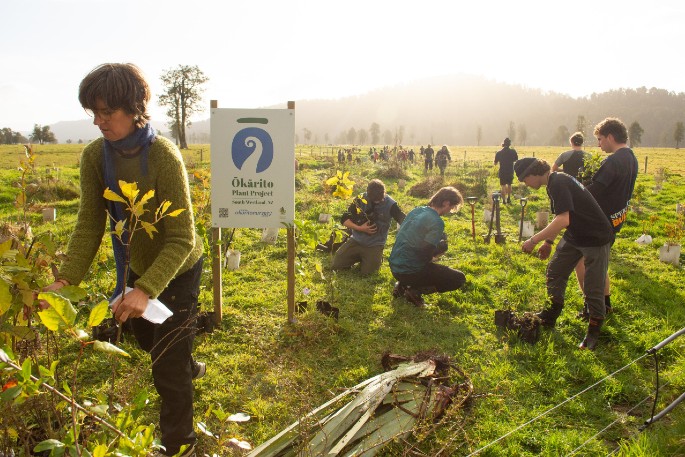
According to DOC, the partnership facilitated 14,240 volunteer hours between June 2022 and February 2026, planted almost 30,000 trees and created 13.4 full-time equivalent jobs in the conservation sector.
Development West Coast chief executive Heath Milne says the model makes it easier for businesses to contribute.
“The partnership facilitates involvement in conservation through a portfolio of ‘ready to roll’ projects businesses can invest in, either with staff time or financial contribution.”
Economic and environmental gains
Nature Economy Partnership lead Zak Shaw says investment in conservation can support branding, community wellbeing and economic diversification.
“In my view, the long-term prosperity of the West Coast is inextricably linked to the health of its natural environment.”
DOC says people can also contribute individually through volunteering, planting days, pest trapping and helping younger generations connect with nature.