


This Content Is Only For Subscribers
Inbound operators wanting room to move at Waitomo should be booking clients in now, before peak summer fills every tour.
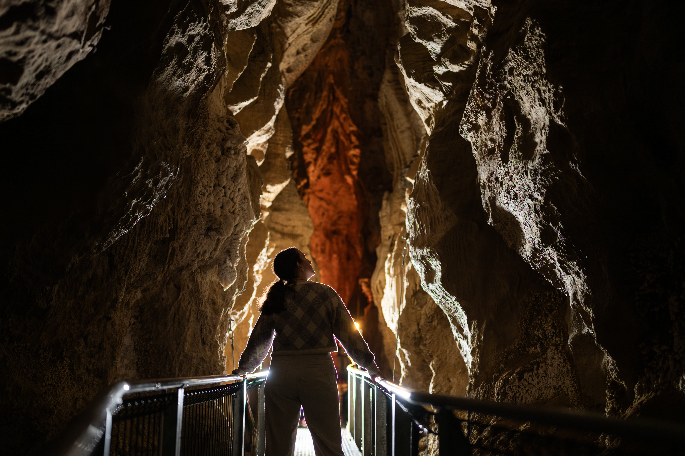
Logan Doull, Ruakuri Cave Waitomo operations manager, says the caves are about to hit capacity. “Pretty soon in peak season, it doesn’t matter what time, every tour is going to be full,” he says.
Timing
Waitomo’s proximity to Auckland makes it an easy add-on for visitors, and that puts pressure on the middle of the day.
“I think just with Waitomo’s place in proximity to Auckland, we get a lot of demand over the sort of mid-morning to mid-afternoon period. I think the general advice would be to book ahead and consider the fringe times, you know, early in the morning, later at night,” Logan says.
Making it count
For operators willing to build an overnight into the trip, the off season offers a quieter experience.
“You can avoid some congestion by potentially staying a night in that location where you wouldn’t have considered before,” Logan says.
“You know, it’s easy to be drawn into the bigger centres where there might be a bit more on offer, but people tend to forget that, well, there’s enough on offer in the smaller centres. So, we might get a lot of visitors through Waitomo, but the tours are relatively short, there’s not really enough to keep them here for longer, so they’ll do a cave tour and generally move on to Rotorua or Taupō, or beyond that to Auckland.”
International visitors remain at the heart of Waitomo, with new markets starting to come through.
“International is our prominent business. We’ve had consistency from our main groups, which is mainly the English-speaking countries, but other groups are catching up, so it would be great getting a bit more exposure in markets that wouldn’t be considered traditional for the adventure tourism world,” he says.
The right people
Staffing a short season is a familiar headache for any seasonal operator, but Logan says loyal guides help fill the gaps.
“That’s a big one, especially for any tourism or seasonal business, you know, training people up for a relatively short season and then, having to say goodbye to them. So, we’re lucky that we get a lot of returning staff, often out of the blue when we’re busy recruiting and figuring out where we’re going to get our numbers from, and suddenly, ‘Oh, this person is available. Wow, they’re coming back too, and they’ll have brought a friend.’ I guess that speaks to the culture of the workplace.”
And getting a new guide tour-ready can take weeks.
“And with our different tours, we’ve got a walking tour, which is a lot more interpretive and much lower risk, so that one can take two to three weeks to train someone. And then for the adventure tours, or where there’s more risk management involved, that can take a bit longer.”
Behind every tour is a monitoring system that keeps watch on the cave.
“It’s not so much a total visitation number, say a number of people through in a day. We have some good monitoring systems in the cave. We have a full-time environmental manager to look after the caves that we operate in, and we’re getting really good live data that comes in – I can sit here in the office and tell you what the water level is and what the CO2 is, and all the other environmental factors that we need to keep an eye on. We get alerts if things hit a threshold, so it gives us the next step of how we respond to those,” Logan says.
Guardians of the cave
“But the good thing is about the cave we’re operating in, it tends to look after itself. We see ourselves as guardians, you know, we are the kaitiaki of this place but managing the tours themselves – so when you’ve got a group in there, you are policing, but you’re trying not to have that being the dominant feature. You’re doing it subtly at the same time while you’re educating and getting them to understand why they’re looking after this place, why it’s a privilege to be there and getting a bit more buy-in, so that they actually leave feeling like they’ve had a great experience, but also feeling like they’ve contributed to looking after this environment.”
And the challenges?
Logan says it’s challenging when guides get groups that don’t have English as a first language.
“You really have to focus on the real key points and be a bit tighter with, say, the group management as you would with when everyone understands you.”
Telling the conservation story is another.
“And another one of the challenges we have is people want to know about the environmental efforts we have. I think travellers these days are a lot more conscious and aware of not just paying for an experience but are they paying for someone who’s reputable and is doing good things with their environment, their community and their wider reach. So, the problem we have is the caves themselves. There’s already so much to see and talk about without trying to get our extra efforts across. So, looking at other ways to promote the environmental achievements is ongoing.”
And often, it’s domestic visitors who miss out.
“Being so close to Auckland, we get people that just arrive on a hunch. They go, ‘We’ve got an afternoon,’ and they’ll just turn up. And that’s great that they feel that we are that accessible, but if they haven’t booked, sometimes they turn up and they have to wait for a while, or sometimes they miss out altogether,” Logan says.
“I guess Kiwis don’t tend to book ahead! They try their luck, and, you know, we don’t want people to be disappointed. We want them to be organised and get the experience they want.”