

This Content Is Only For Subscribers
Most Kiwis know when ski season starts. But there’s another natural spectacle with a seasonal rhythm that few people know about, and it’s happening deep beneath our feet.
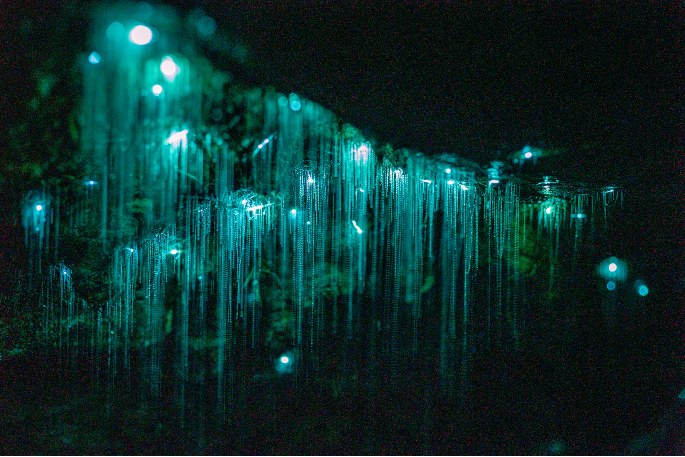
As November gives way to summer, Waitomo’s glowworm world is entering one of its most fascinating periods of the year. More flying insects mean more food for growing larvae, potentially brighter displays and a new generation of tiny glowworms beginning to establish themselves.
According to Ruakuri Cave operations manager Logan Doull, November is one of the standout months to experience the caves, combining favourable conditions for glowworms with generally fewer visitors than the peak summer period.
“November is one of the best times to see glowworms at Ruakuri Cave because late spring brings an increase in flying insects, providing more food for the glowworms,” says Logan.
“Well-fed glowworms can produce brighter displays and longer feeding lines, creating a particularly impressive glowworm canopy.”
The next generation of living lights
While visitors marvel at thousands of blue-green lights illuminating the darkness, Ruakuri’s guides are watching something else too – the next generation of glowworms appearing in new and unexpected places.
“Spring, particularly from September to November, is when we often notice more tiny new glowworms appearing,” says Logan.
“When they first hatch, they’re almost completely transparent and show up as these faint little dots of blue-green light. Over time, they grow, develop their fishing lines and become part of the incredible displays people come to see.”
For guides, spotting new clusters is one of the fascinating parts of working underground.
“Sometimes a female glowworm has chosen a different spot to lay her eggs. We keep an eye on those young glowworms through summer to see whether they establish themselves. What starts as just a few tiny lights could eventually grow into a whole new cluster.”
Five surprising things you probably didn’t know about glowworms
Behind their magical blue-green glow lies a surprisingly strange world of hunting, survival and remarkably short adult lives.
- They’re not actually worms. New Zealand glowworms are the larvae of fungus gnats, spending months glowing in the darkness before transforming into adult flies.
- Their beautiful glow is actually a trap. Glowworms use blue-green light to attract flying insects, catching them in long, sticky silk fishing lines.
- They can eat each other. When food is scarce, larger glowworms may eat smaller ones that stray too close.
- Baby glowworms are almost invisible. Newly hatched larvae are tiny, nearly transparent and produce only faint dots of light, making them difficult to spot.
- Their adult lives last just days. After spending months as glowing larvae, adult glowworms survive for only a few days. They don’t eat, instead focusing entirely on mating and reproducing.
“Glowworms spend most of their lives doing three things – eating, sleeping and fishing,” says Logan.
“But it’s not always quite as peaceful as it looks. If food becomes scarce, the bigger ones might eat the smaller ones.”
A different kind of summer spectacle
While Ruakuri Cave’s glowworm displays can be experienced year-round, November offers a particularly interesting window into the changing life of the caves.
With plentiful food supporting the larvae, new clusters of glowworms establishing themselves and the busiest summer visitor period still ahead, it’s an opportunity to experience one of New Zealand’s most extraordinary natural spectacles in a different light.
So, while ski season may be over, another of New Zealand’s remarkable natural spectacles is building towards summer – and this one has been quietly glowing beneath our feet all along.