

This Content Is Only For Subscribers
Behind the scenes of Auckland Airport’s international terminal, work is underway to modernise the original 1990s baggage handling system, with a major upgrade creating a faster, more seamless departure for travellers.
More than 10km of baggage conveyor equipment will be added or replaced as part of the new system, making it three times longer than the existing system. It will have enough capacity to serve both international and domestic jet travel, expected to be finished in 2029.
Auckland Airport chief infrastructure officer Murray Burt says they’re upgrading a core piece of airport infrastructure that operates around the clock and sends over four million bags offshore each year.
“Every bag has a journey travellers never see. Once it disappears behind the check-in area, it moves through a complex network of belts, systems and technology before reaching its aircraft.
“The baggage system is the backbone of the airport. While the current system has served us well for decades, it’s been continually added over the years, making it a bit of a spaghetti junction. We’re now replacing it with a new generation of technology.
“The new super smart system will increase capacity and resilience, reduce bottlenecks, and help us manage the growing number of bags travelling through Auckland Airport every year.”
Upgrading to an individual carrier system, it will move bags through the airport on individual trays tracked with new radio frequency identification tags. Once completed, the system will allow bags to be tracked and located at every stage of their journey through the airport.
“For travellers, it means greater confidence their bag is where it should be and moving through the airport as expected,” says Murray.
“It’s about creating a more reliable journey behind the scenes, using technology that gives us far better visibility of where bags are throughout the system.”
The bag hotel
The new baggage handling system will include early bag storage, giving customers greater flexibility to check in their luggage well before departure. Dubbed the ‘bag hotel’, it will be capable of holding around 3,000 bags at a time, for domestic and international flights once completed.
Luggage will be stored in new 6.5-metre-high rack spanning approximately 40 meters in length and 20 meters wide. Robotic cranes, known as mini loaders, will automatically manage bags by moving between the racks and placing trays containing suitcases into the bag hotel.
Murray says, “The new baggage handling system will reduce manual handling, improve how bags move through the airport and ultimately give travelers greater flexibility around when they check-in their luggage.”
Baggage brain
The brain of the baggage system – a new high-level controller – has been installed, which is the software layer that directs bags where to go.
Built in Denmark and freighted to AKL, similar software can be found in airports around the world, such as Singapore’s Changi Airport, Finland’s Helsinki Airport and Malaysia’s Kuala Lumpur International Airport.
Murray says, “The challenge is replacing the technology while keeping bags moving and flights departing as normal. It takes extensive testing and careful planning to make that happen.”
More than 1,000 tests were completed before the software was brought online, and over 750 conveyors and 10 automatic tag readers, which guide bags to their destination, have been installed or refurbished over the past two years.
The eastern bag hall, a 2600sqm site built in 2023, which connects the current international terminal to the new domestic jet terminal, acts as the central hub for luggage and will be upgraded to new technology across the next year.
Arriving travellers
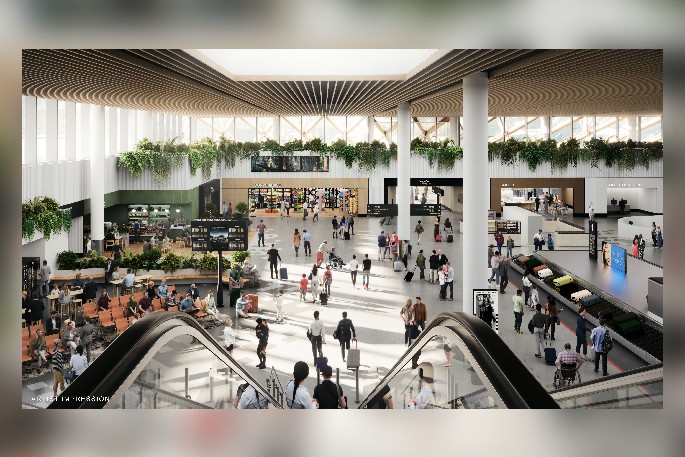
Murray says, “While much of the focus is on international departures, construction is also well underway in the arrivals baggage reclaim hall within the integrated domestic and international terminal.”
Over seven tonnes of baggage support steel have now been installed, paving the way for the next stage of the baggage system installation.
Where the baggage journey begins
The baggage system upgrade will support Auckland Airport’s transition to a common use self-service check-in environment, which sees the removal of traditional counters, replaced with shared technology across airlines. It will ensure the baggage network has the capacity and technology needed to efficiently process, track, and route bags from automated bag drops to the correct aircraft.
Auckland Airport’s 22 automated bag drops currently process an average of 62,500 bags each month, rising to an estimated 90,000 during the January 2026 peak. A further 15 automated bag drops will be installed later this year.
Murray says, “When the works are complete, customers will spend less time queuing and have more time to get through security, relax before their flight or enjoy everything the terminal has to offer.”
“We’re now entering the next stage of the transformation programme and there may be periods of disruption as work progresses. We thank travellers for their patience.”