

This Content Is Only For Subscribers
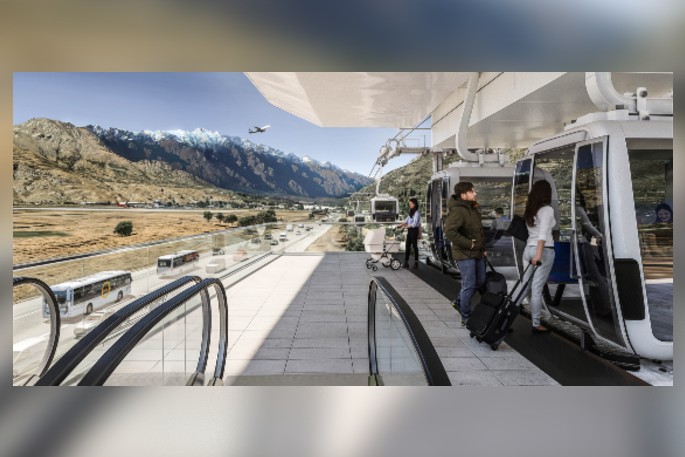
The Queenstown Cable Car project has moved a significant step closer to construction, with a $150 million debt facility agreed in principle to help finance the project.
The agreement between project developer Southern Infrastructure Limited (SIL) and Private Capital Group (PCG) marks a major milestone in developing the South Island’s first mass-rapid-transit network in Queenstown, as the region grapples with growing traffic congestion.
The facility would be provided through PCG’s infrastructure lending platform and sourced from international investors participating in the Government’s Active Investor Plus (AIP) visa programme, bringing offshore investment into a major New Zealand infrastructure project.
Southern Infrastructure chief executive officer Ross Copland says the agreement is an important step towards unblocking Queenstown’s choked roads.
“The narrow road from Queenstown airport to the town centre exceeded 10m vehicle trips for the first time last year and traffic continues to grow exponentially. 24 transport studies by our leading transport experts over the past two decades have reached a resounding consensus – a gondola transit system will be essential when our roads reach capacity. This agreement with PCG brings us a step closer to delivering this critical infrastructure by the end of this decade.”
Investing in Queenstown’s Future
Ross says PCG’s work in structuring the debt facility and marshalling investor demand had been central to moving the project closer to securing the financing needed for construction.
Paul Carman, founder and managing partner of Private Capital Group, says the investment allows Queenstown to confront one of its most pressing problems.
“Delivering on the Queenstown Cable Car creates certainty, empowering local, regional, and national businesses to build and execute sustainable, long-term plans in the region. This transaction will enable and promote an environment of economic growth and development, together with long term job creation. The case for a mass rapid transit solution in Queenstown is clear, this capital investment ensures that the problems associated with congestion are able to be addressed.
“PCG has the capacity to invest in city-shaping projects. Queenstown is a key region for economic growth, with enormous future potential. This project provides a demonstrable and deliverable piece of key infrastructure to help facilitate and underwrite this. Putting capital to work with Southern Infrastructure is exactly the kind of investment our investors are looking for — projects that change the shape and the trajectory of a region, benefit its residents and businesses, its considerable visitor base and its economy,” Paul says.
“Our funds include a combination of domestic and international investors, where their combined capital is applied through PCG’s funds directly into New Zealand assets. QCC is a prime example of a project that will be used every day by New Zealanders, their businesses and visitors alike.”
The Queenstown Cable Car is designed to be a major part of a broader, integrated response to Queenstown’s transport challenges. It would work alongside more frequent buses, travel demand management measures, improved cycleways and walking connections, park-and-ride facilities and targeted road improvements to give people more reliable alternatives to travelling by car.
Rounding out the capital structure
There is still an approval process ahead for the PCG facility, with the term sheet non-binding and remaining subject to due diligence, credit approval and full documentation.
This facility will sit alongside the other funding workstreams SIL is progressing for the project.
SIL is working with National Infrastructure Funding and Financing (NIFF) on a funding and financing arrangement under the Infrastructure Funding and Financing Act — a levy mechanism that ensures those who benefit from the cable car, through the land value uplift it creates, contribute a fair share of its cost. The principle is simple: the project should be paid for by those it benefits most.
SIL has also submitted a Market-Led Proposal to NIFF for the project which may help streamline the complex approvals required across Government for any public transport investment of this scale.
“Together, private debt, a beneficiary-pays levy and the project’s own farebox revenue underpin a capital structure that delivers a mass rapid transit spine for Queenstown without relying on QLDC’s already over-stretched balance sheet,” Ross says.
“The agreement demonstrates that private capital is ready to fund Queenstown’s transport backlog where a credible project and a clear delivery pathway exist.
“Queenstown has spent a decade planning this. PCG has done in a matter of months what has eluded this district for years — put real money on the table for a project that adds transport capacity off the road network. We are grateful for their confidence and their commitment.”
Project update
Work continues across the Cable Car development:
- Consenting — preparation of the substantive application for consent is well advanced.
- Land — discussions with landowners along the alignment are ongoing.
- Design — detailed design is progressing with ropeway manufacturers Doppelmayr and Leitner.
- Parking building — Naylor Love is progressing the design and pricing of the parking building in the Queenstown town centre, which is proposed as part of the wider programme of work.