

This Content Is Only For Subscribers
Growing demand for environmentally responsible travel is placing increasing pressure on tourism operators to demonstrate stronger sustainability practices, with new research showing 84 per cent of global travellers are seeking more environmentally conscious experiences.
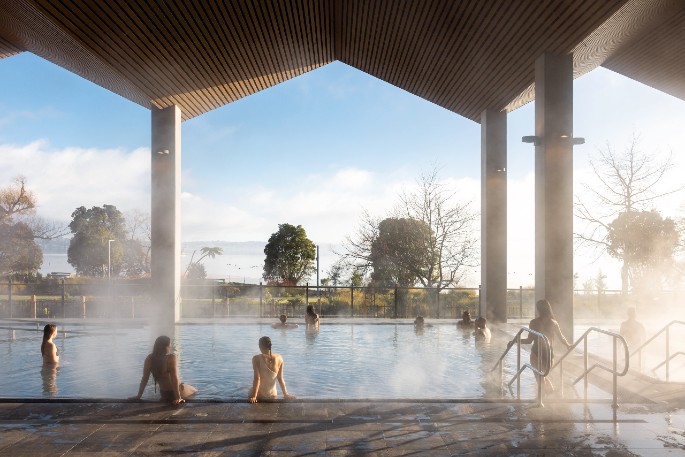
In Rotorua, Wai Ariki Hot Springs & Spa says it has adopted a regenerative geothermal approach designed to work with, rather than against, the natural environment.
Geothermal cycle designed around regeneration
Unlike conventional pool systems, Wai Ariki drains and cleans each of its 13 geothermal pools nightly, returning the water to the whenua before drawing fresh geothermal water for the following day.
Wai Ariki general manager Debbie Robertson says the approach reflects a broader commitment to sustainable tourism and kaitiakitanga.
“Finding sustainable ways to operate is key in a modern world where we are constantly taking too much,” Debbie says.
“Most pools fight nature by trying to hold water in place for as long as possible. We’ve taken a different path; it’s all about creating a continuous, regenerative cycle that works with nature, rather than against it.”
The geothermal water is drawn from natural wells deep underground before being cooled to bathing temperature for use across the spa.
Each night, the water is reinjected back into Rotorua’s geothermal system to help support long-term sustainability of the resource.
“Our spa’s approach is built on the practices of our tīpuna,” Debbie says.
“As kaitiaki of the whenua, we believe that what we take from Papatūānuku, we return to her in its natural state.”
Energy efficiency focus
The geothermal resource is also used across the wider facility for heating pools, underfloor systems and indoor climate control, reducing reliance on artificial energy sources.
Wai Ariki says the geothermal water used across the site contains only natural minerals and silica, without chemical additives.
“Our goal was to demonstrate that luxury facilities don’t need to come at the cost of the environment,” Debbie says.
“By integrating geothermal energy across the site, we reduce artificial energy use while still delivering a premium experience for visitors.”
She says sustainability expectations from travellers are continuing to grow, particularly as fuel supply concerns and wider environmental issues remain in focus.
“If travellers are planning their trips with sustainable intent, it’s important we meet them where they’re at,” Debbie says.
TRENZ sustainability focus
Sustainability and environmental stewardship are expected to feature strongly at TRENZ 2026, which takes place in Auckland from May 19-21.
The annual tourism trade event brings together tourism operators from around New Zealand with international travel buyers to showcase the country’s visitor experiences.