

This Content Is Only For Subscribers
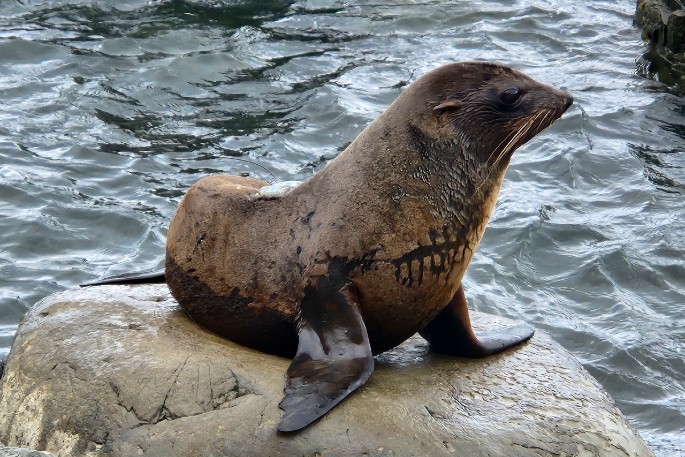
Researchers have begun a new study in Kaikōura to better understand the behaviour of kekeno/New Zealand fur seals while they are at sea.
The research team last week attached satellite tracking devices and dive data collectors to eight female fur seals with pups. The devices will record the seals’ location, dive behaviour and ocean temperatures.
University of Canterbury researcher Dr Mia Wege, who is leading the study, says the work will help build a clearer picture of where and when fur seals are feeding, and how this relates to changing ocean conditions.
“Previous unpublished research found that some fur seals tracked from Kaikōura travelled as far as Cape Palliser in the North Island and the Otago Peninsula during foraging trips,” Mia says.
“This new research will help us understand what these fur seals are doing while they are out at sea, and what interactions they are having with other breeding and haul-out sites around the country.”
Department of Conservation researcher Dr Jody Weir, who leads fur seal research for DOC, says female fur seals were selected for the study because of their importance to population health.
“As the producers of pups, females are key to the future of the population,” Jody says.
“We know from starvation and disease events that females have particularly high energy needs. Pregnancy and lactation require good nutrition, and we are seeing high numbers of aborted pups and pup deaths, which could be partly linked to the quality or quantity of milk.”
Mia says the success of females and their pups is closely tied to conditions in the waters surrounding Kaikōura.
“Female fur seals hunt for prey offshore, so understanding what is happening in those waters is critical,” she says.
Jody says the seals are also helping researchers learn more about the wider marine environment.
“Fur seals are a sentinel species, providing early warning signals about changes in their environment,” she says.
“Earlier this year, a new strain of canine distemper virus was detected in young fur seals at Kaikōura and Cape Palliser, and in spring 2023 hundreds of fur seals died from starvation.”
She says long-term monitoring is essential to understand population trends, particularly on the West Coast of the South Island.
“In 2025, pup numbers at Wekakura Point, Cape Foulwind and Taumaka Island were found to have declined by 83 per cent, 71 per cent and 61 per cent respectively compared with the 1990s,” Jody says.
“Because these declines have not been linear, they would not have been detected without the regular monitoring carried out by DOC rangers.”
Jody says public perceptions that fur seals are thriving may not reflect emerging risks.
“With ongoing ocean changes and the growing threat of avian influenza, which is now affecting pinnipeds more severely than birds, the picture could look very different in just a few years,” she says.
DOC and Biosecurity New Zealand are asking the public to report sightings of three or more freshly dead fur seals anywhere in the country by calling the exotic pest and disease hotline on: 0800 80 99 66.