

This Content Is Only For Subscribers
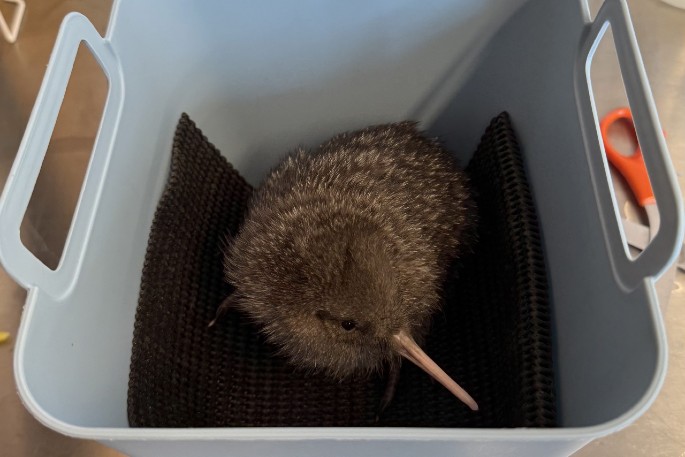
Two kiwi pukupuku (little spotted kiwi) chicks have been uplifted from a recently rediscovered population in South Westland, offering early evidence that the species is breeding on the mainland for the first time in decades.
Announced in July, the rediscovery of kiwi pukupuku in the wild on mainland New Zealand surprised and delighted conservationists and mana whenua Ngāti Māhaki. At that time, only one bird had been confirmed in the remote Westland area. The Department of Conservation (DOC) has now identified nine individuals, including breeding pairs.
DOC ranger project lead Iain Graham says rangers have been building their understanding of the population and monitoring known birds during the breeding season.
“Because it’s such a critical population, we’ve been monitoring them during breeding season, something we don’t usually do.
“The team went in to check on the kiwi pukupuku and came across two chicks in a nest. It was quite a surprise to them; they were expecting to find a couple of eggs and ended up seeing two little chicks staring back at them.
“The chicks are each less than 200 grams, so tiny, and just the perfect early Christmas present for everyone involved.”
The chicks have been transported to Willowbank Wildlife Reserve in Christchurch to grow in a safe, predator-free environment. On their journey north, they made a brief stop to meet members of hapū Ngāti Māhaki.
Te Rūnanga o Makaawhio chief executive Kara Edwards says holding a chick was an overwhelming experience.
“We feel incredibly lucky to have a precious taonga in our midst. We’re thrilled they have survived in our whenua, and our goal is for them to thrive here.
“There’s a lot to learn from such a newly rediscovered population, but our hope for the future is to see these manu thriving on the mainland, and especially in South Westland.”
Two eggs from another nest have also been uplifted for incubation at Willowbank Wildlife Reserve.
As the smallest of the kiwi species, kiwi pukupuku are highly vulnerable to predation, taking two to three years to reach a safe weight. Raising chicks in predator-free environments remains a proven way to support population growth.
Iain says the outlook for the population is promising.
“We’ve now found nine individual birds in South Westland, including two sets of breeding pairs. The team will continue to look for more birds to determine the full extent of the population.
“We’re expanding our search area and considering the best options for long-term conservation of this special kiwi pukupuku population.
“It’s remote, so we’re relying on helicopters to get us into the backcountry. We really appreciate the support from Willowbank Wildlife Reserve so far in helping us continue this important work.
“We know lots of people want to help, and in the theme of ‘always be naturing’, people can get involved and contribute directly by donating through the New Zealand Nature Fund website.”
Kiwi pukupuku were previously thought to be extinct on mainland Aotearoa, having not been seen in the wild for nearly 50 years. An estimated 2000 birds survive across offshore islands, with numbers increasing through the work of community groups, agencies and tangata whenua.